
Betty Mould-Iddrisu Renews Call for Passage of Spousal Property Rights Bill
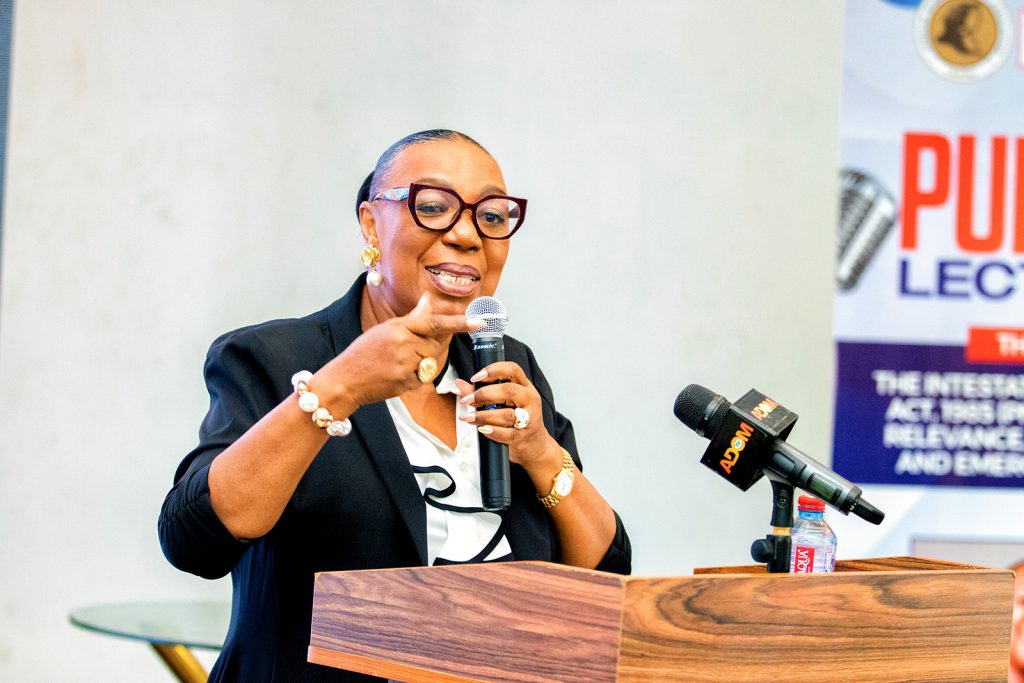
Former Attorney-General and current Member of the Council of State, Madam Betty Mould-Iddrisu, has issued a renewed call for Parliament to pass the long-delayed Property Rights of Spouses Bill, lamenting the legislature’s failure to protect the rights of women in marriage.
“Parliament has failed women by refusing to pass the bill that would safeguard their rights within marriage,” she declared, addressing a public lecture hosted by the University of Professional Studies, Accra (UPSA) Law School. The event, held on Tuesday, 16 December 2025, at the West Wing of the Kofi Ohene-Konadu Auditorium, marked the 40th anniversary of the enactment of the Interstate Succession Law, 1985 (PNDCL 111), under the theme: “The Interstate Succession Law Act, 1985 (PNDCL 111@40): Relevance, Challenges and Emerging Issues.”
Reflecting on the historical significance of PNDCL 111, Mould-Iddrisu described the law as “revolutionary” at the time of its introduction. “It served as a stop-gap measure that brought accountability to family heads and addressed some of the glaring loopholes within the traditional inheritance system.”
She explained that the law was designed to provide a uniform and equitable framework for the distribution of intestate property, with a particular focus on protecting the nuclear family, especially women and children. It represented a bold attempt to modernise family law and uphold fundamental human rights.
However, she argued that the law, while groundbreaking in its time, is no longer sufficient to address the complexities of contemporary family structures and property relations. “Much more needs to be done to make it effective in today’s context,” she asserted.
Madam Mould-Iddrisu expressed deep frustration over the prolonged delay in passing the Property Rights of Spouses Bill, which she first introduced to Parliament in 2009 during her tenure as Attorney-General. “I stood in Parliament in 2009 to present that bill, and to this day, it remains unpassed. In this regard, Parliament has failed the women of Ghana,” she lamented. “I am calling on women’s groups and civil society organisations to get involved. The time to act is now.”
The proposed legislation seeks to regulate the distribution of marital property upon divorce or the death of a spouse, aiming to correct longstanding inequalities that disproportionately disadvantage women. It also includes provisions for recognising property rights in cohabiting relationships, following extensive national consultations led by the African Women Lawyers Association (AWLA).
While commending the judiciary for its efforts in interpreting and applying existing laws, Madam Mould-Iddrisu emphasised that legal reforms must be matched by legislative action. “The judiciary has done an incredible job over the years, but we need a collective push to ensure this bill becomes law,” she urged.
Her remarks have reignited public discourse on the need for comprehensive legal reforms to protect spousal rights and ensure gender equity in property ownership and inheritance.
More news
All news-
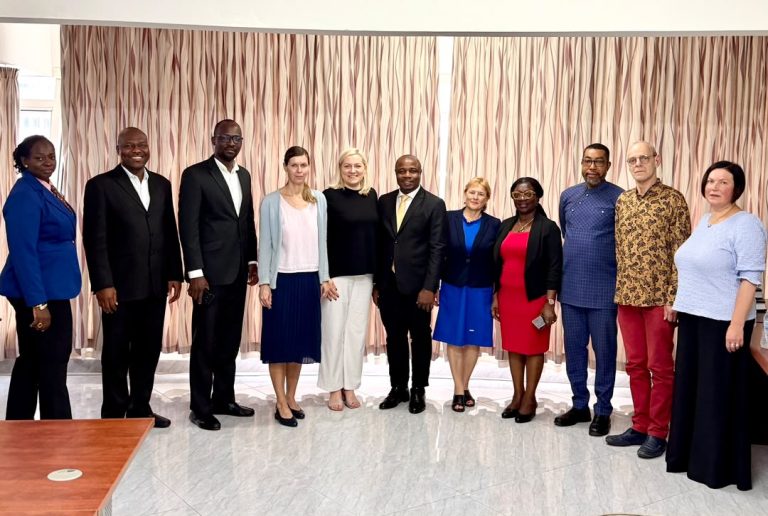 EKA University Delegation Meets UPSA Vice-Chancellor to Strengthen Academic Ties
A delegation from EKA University of Applied Sciences has paid a courtesy call on the Vice-Chancellor of the University of Professional Studies,…
-
 UPSA MBA TQM Students Examine Quality Management Practices at Entrance Pharmaceuticals and Japan Motors
Students pursuing the Master of Business Administration (MBA) in Total Quality Management at the University of Professional Studies, Accra (UPSA), have undertaken…
-
 UPSA Final-Year Students Present Research Proposals to Address Practical National Challenges
Final-year students of the University of Professional Studies, Accra (UPSA), have begun presenting proposals under the University’s Interdisciplinary Research Project, outlining ideas…
Ready to join the professionals?