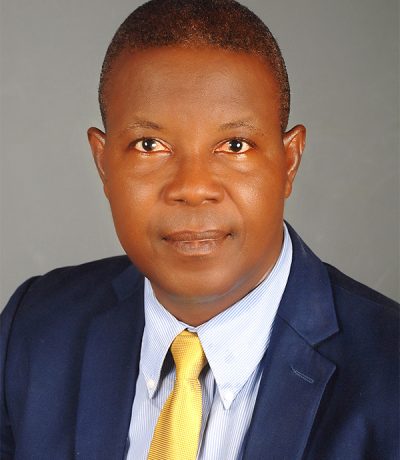
Adams A. Kobla Azameti
Lecturer
Profile
Professional Profile
My research sits at the intersection of Machine Learning, Intelligent Transportation Systems (ITS), and cyber–physical mobility environments, with a focus on developing data-driven models that improve the efficiency, safety, and sustainability of modern transportation networks. As urban mobility systems grow in complexity driven by congestion, IoT proliferation, and the emergence of autonomous vehicles, traditional traffic management solutions are increasingly inadequate. My work addresses these gaps by advancing real-time predictive modelling, multi-agent reinforcement learning, and Spatio-temporal graph neural networks for next-generation vehicular communication systems.
A central thrust of my research investigates how heterogeneous data sources, GPS trajectories, sensor feeds, radar/Bluetooth/Wi-Fi nodes, crowdsourced reports, and weather and environmental signals will be fused into a unified ML framework capable of predicting and mitigating congestion before it emerges. This work builds on my previous computational models for intermittent V2V communication and congestion control, which demonstrated the potential of sparse network modelling techniques to support decision-making in unstable or fragmented vehicular networks.
My current research expands this trajectory by proposing a Multi-Agent Reinforcement Learning framework integrated with Spatio-Temporal Graph Neural Networks. This framework aims to enable vehicles and infrastructure nodes to cooperate dynamically, negotiate optimal routes, and jointly minimize congestion in real time. This research draws inspiration from emerging fields such as cooperative AI, distributed optimization, and next-generation wireless communication (5G/6G), with the broader goal of contributing to the development of safer, greener, and more autonomous mobility ecosystems.
In addition to mobility research, I maintain interdisciplinary collaborations in AI for Education, computer vision, and environmental data modelling. I have developed adaptive learning systems and contributed to climate-impact studies that model oceanographic data using Python-based scientific workflows. Across these diverse domains, my research philosophy emphasizes algorithmic transparency, data integrity, and ethical AI deployment, ensuring that technology serves societal well-being while advancing scientific rigor.
Ultimately, my research seeks to contribute not only to the theoretical advancement of machine learning but also to its practical application in solving real-world problems in transportation, education, and environmental systems. I aim to continue developing scalable models, multidisciplinary collaborations, and impactful technologies that support Ghana’s national development priorities and global smart mobility innovation.
Azameti is also an active reviewer for IEEE and Elsevier journals, a research mentor, and a contributor to scientific workshops in AI, data-driven modelling, and educational development across leading Ghanaian institutions.
Selected Publications
• Teaching & Academic Service
• Lecturer, Department of Information Technology Management, UPSA
• Supervisor of undergraduate research projects in ML, networks, data analytics, and intelligent systems
• Reviewer for IEEE and Elsevier journals
• External Examiner for WAEC (ICT & Mathematics)
Conferences, Workshops & Scientific Engagement
Azameti has delivered talks, workshops, and research presentations at:
• Centre for Teaching Support Workshops (UPSA, UCC)
• IEEE GreenComm Virtual Conference
• DAAD-funded DEMIS Project Conference on Sustainability
His engagements include poster presentations, paper presentations, and AI–oceanography modelling demonstrations.
Research Ethics & Honors
Current Research Agenda Azameti’s ongoing work focuses on a Multi-Agent Reinforcement Learning framework enhanced with Spatio-Temporal Graph Neural Networks for real-time congestion prediction and mobility optimization in next-generation vehicular networks. His broader vision is to develop scalable AI systems bridging transportation science, wireless communication, and smart city innovation.
Publications (or Articles)
Azameti, A., Katsriku, F., Owusu, E., & Abdulai, J. D. (2024). Mitigating Intermittent Connectivity Problems in Vehicle-to-Vehicle Communication (V2VC): A Sparse Network Computational Model (SNCM). EAI Endorsed Transactions on Mobile Communications and Applications , 8 . https://doi.org/10.4108/eetmca.5536
View publicationAzameti, A. A. K., Quist, S. C., Koi-Akrofi, G., & Nwachuku, B. C. (2023). Authors: A Contemporary Approach to Designing and Implementing Electronic Voting Systems (EVS). EAI Endorsed Transactions on Smart Cities , 7 (3). https://doi.org/10.4108/eetsc.3896
View publicationAzameti, A., Koi-Akrofi, G., Agbodo, N., & Amegadzie, J. (2022). A ModelDriven Optical Clinic Management Systems: Systematic Software Engineering Approach. EAI Endorsed Transactions on Pervasive Health and Technology , 8 (30). https://eudl.eu/doi/10.4108/eai.16 - 3 - 173610 .
View publicationElsevier Researcher Academy Workshops (2020)
Azameti, A. A., Katsriku, F. A., Chong, P., & Abdulai, J. D. (2018). The Effect of Congestion Control Model on Congested Traffic Flow in Vehicular Ad Hoc Networks (VANETs). EAI Endorsed Transactions on Mobile Communications and Applications , 4 (13). http://dx.doi.org/10.4108/eai.22 - 3 - 154371
View publicationCoastal Ocean & Environment Summer School (2017, 2019, 2023)
https://www.researchgate.net/profile/Adams-Azameti
View publicationAreas of Specialization
Research Interests
- Primary Domains
- Machine Learning & Deep Learning
- Intelligent Transportation Systems (ITS)
- Vehicular Ad-Hoc Networks (VANETs) & V2V/V2I Communication
- Multi-Agent Reinforcement Learning for Traffic Optimization
- Spatio-Temporal Graph Neural Networks for Mobility Prediction
- Cross-Cutting Domains
- AI in Education Policy & Digital Learning Systems
- Human–Computer Interaction
- Computer Vision Applications
- Data Science, Statistical Modelling & Time-Series Forecasting
- Selected Research Contributions
- Developed computational models for real-time congestion control in intermittent V2V communication environments
- Applied ML and optimization techniques for energy-efficient smart mobility and EV route planning
- Designed AI-driven adaptive e-learning platforms for personalized education
- Built CNN-based diagnostic modules in medical image analytics
- Conducted large-scale oceanographic data modelling for environmental and climate studies. Applied data-driven forecasting techniques for energy resource optimization
Professional/Teaching Experience
Teaching Philosophy for Adams Addison Kobla Azameti
My teaching philosophy is grounded in the belief that students learn best when they actively engage with real-world problems, apply theory through hands-on practice, develop the confidence to innovate independently. As a lecturer in Information Technology Management, my goal is to cultivate learners who are not only technically competent but also ethical, creative, and capable of lifelong inquiry.
- Teaching for Understanding and Practical Relevance
Technology evolves rapidly, and students must learn how to think, not just what to think. I use applied, problem-based learning approaches that connect classroom content, such as networking, cybersecurity, machine learning, and systems administration, to real industry use cases. I integrate simulations, coding labs, and case studies to ensure students can transfer knowledge beyond the classroom.
- Cultivating Independent Learners Through Research and Projects
I design student projects that require investigation, iteration, and analytical reasoning. During supervision, I encourage students to adopt professional research practices: literature reviews, data preprocessing, model evaluation, version control, and academic writing. This approach has enabled students I supervise to produce award-winning and distinction-level project work.
- Technology-Enhanced Learning and Student-Centered Instruction
Drawing on my interest in AI in education, I incorporate adaptive tools, interactive digital content, and collaborative platforms to diversify learning pathways. My instructional design follows a constructivist approach where students build understanding through guided exploration and peer learning.
- Assessment for Learning, Not Just Measurement
I emphasize formative feedback, continuous, constructive assessment that shows students how to improve. I design assessments that measure both knowledge mastery and higher-order skills such as critical thinking, ethical reasoning, and system design.
- Mentorship, Professionalism, and Growth Mindset
I see teaching as both instruction and mentorship. I intentionally create an inclusive learning environment where students feel respected, supported, and motivated to challenge themselves. I encourage curiosity, resilience, academic honesty, and industry readiness.
References
- Associate Professor. Ferdinand Apeitu Katsriku (Thesis supervisor) , Department of Computer Science
University of Ghana, Legon
Mobile: +233 54 6796771
Email: [email protected]
- Peter Chong (Research Advisor) , Department of Electrical and Electronic Engineering
Auckland University of Technology (AUT)
Tel: +64 9 921 9999 ext: 6132
Email: [email protected]
Position: Associate Head of School (Research)
- Associate Prof. Godfred Koi-Akrofi, Dean of Information Technology and Communication Studies (FITCS). University of Professional Studies, UPSA Mobile: +233 20 295 1976 Email: [email protected]
Positions held & hold
Joseph Ansong
Associate Professor. Ebenezer Owusu
Associate Prof. Emmanuel Asamoah
Honours & Awards
TRREE Research Ethics Certification (Modules 1 & 2)
GETFund Academic Excellence Award